
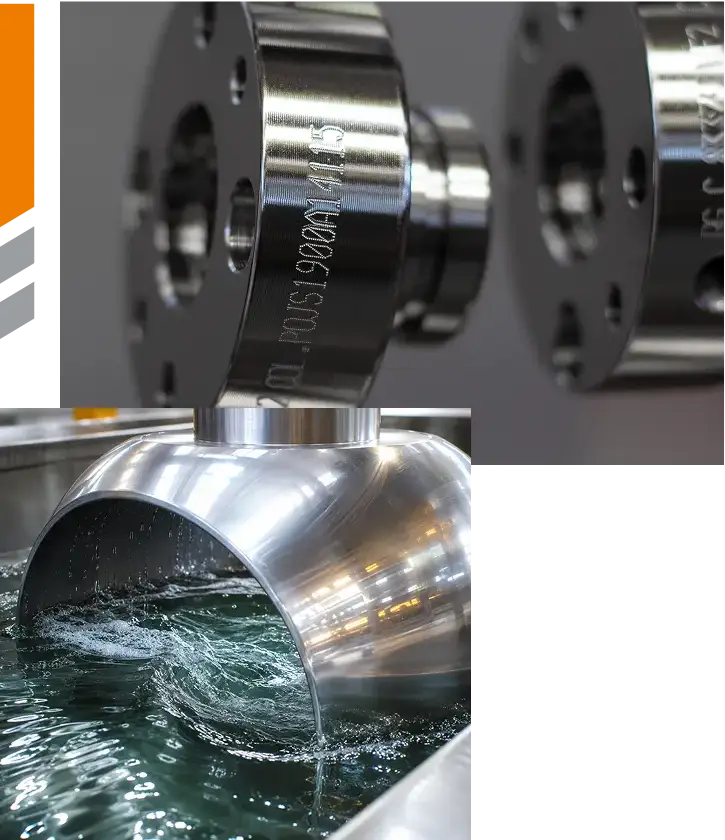
Protection and aesthetics
for metal components
Electroless nickel plating is one of the most effective and proven surface coating treatments for improving durability, corrosion resistance and wear resistance. Thanks to an autocatalytic process that does not use electric current, it is possible to obtain a uniform nickel deposit on complex geometries, without altering the dimensions of the part.
At Deltar, we specialise in high-phosphorus electroless nickel plating treatments and their codeposits, on a wide range of materials.
Our experience, advanced technologies and the largest electroless nickel plating plants in the world allow us to provide high-performance solutions for the most critical needs across a wide range of industrial sectors.
We can coat parts up to a weight of 58 tonnes and dimensions over 5 metres in length and 2.6 metres in diameter.
Among the main advantages of the electroless nickel plating treatment are:
Electroless nickel plating
and its CODEPOSITS
Electroless nickel plating does not offer a single standard solution but can be adopted in different types of use and service depending on the performance required, the technical function of the component and the expected operating conditions.
At Deltar we select and apply specific electroless nickel plating processes and codeposits to guarantee corrosion resistance, hardness, uniformity and also aesthetic finish.
Nickel-phosphorus (ENP) processes
Low-phosphorus electroless nickel plating (ENP 23)
Electroless nickel plating treatment with a low phosphorus content (1-4% P), recommended when high hardness and high wear resistance are required. It guarantees uniform deposition even on complex geometries and is suitable for components subject to rubbing, abrasion and contact, where the priority is mechanical performance and surface durability over time.
Medium-phosphorus electroless nickel plating (ENP 79)
Electroless nickel plating treatment with a medium phosphorus content (5-9% P), ideal for applications requiring an optimal balance between mechanical performance and protection. It offers excellent thickness uniformity, a homogeneous finish and good wear and corrosion resistance, making it a versatile and reliable solution for industrial components with complex geometries.
High-phosphorus electroless nickel plating (ENP 1012)
Electroless nickel plating treatment with a high phosphorus content (≥10.5% P): it is our maximum-performance solution, chosen when the primary objective is to achieve the best corrosion protection and maximum stability over time. The ENP 1012 deposit has an amorphous structure that is particularly suited to resisting aggressive environments (humid, chemical, marine) and is non-toxic, making it also suitable for surfaces in contact with food.
CO-DEPOSITS
Electroless nickel plating with PTFE
Codeposit that combines the protection of high-phosphorus electroless nickel with the anti-friction properties of PTFE. Ideal for components subject to sliding and mechanical wear.
Electroless nickel plating with silicon carbide
Codeposit designed to obtain a surface with very high hardness and abrasion resistance, suitable for components in conditions of intense mechanical stress and prolonged wear.
D-Shield
Organic topcoat applied over the electroless nickel coating to maximise corrosion resistance in particularly aggressive environments. It is not an electroless nickel plating process in the strict sense, but a complementary protective finish that is superimposed on the ENP deposit.
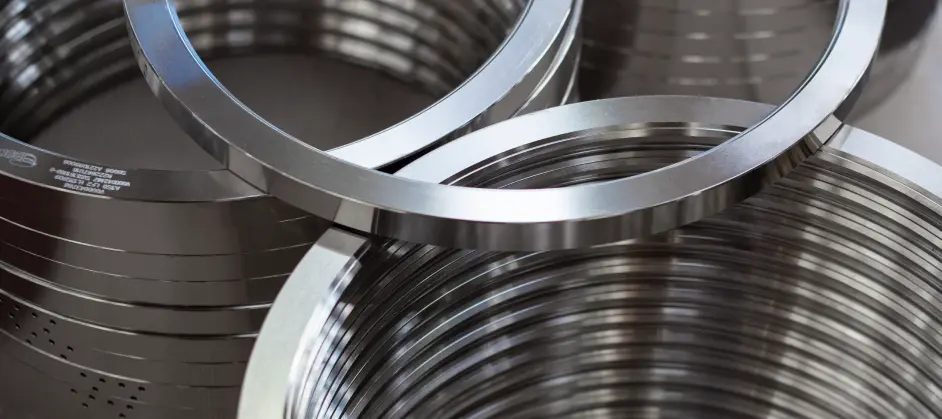
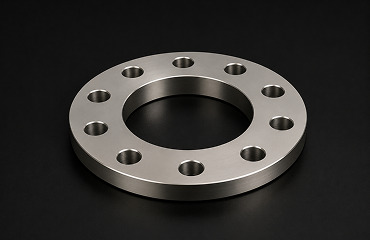
Protection for every metal alloy
services
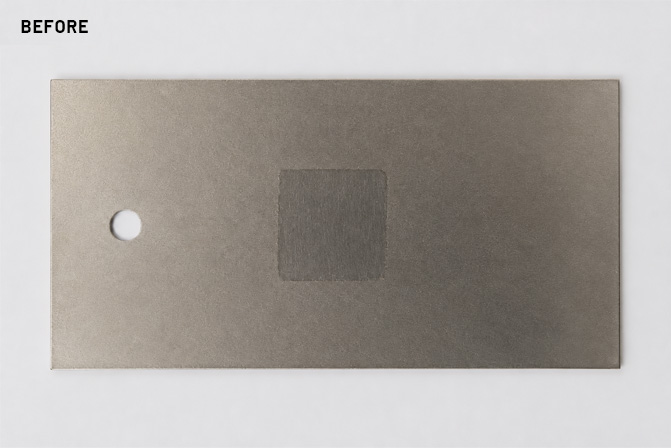
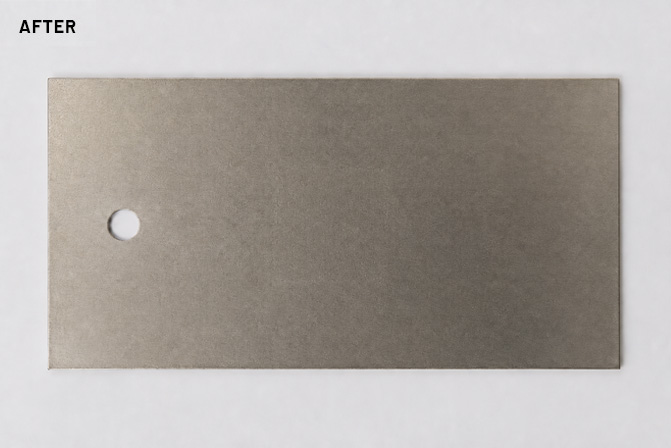
Touch up
process for restoring coating removed through mechanical machining or damage
Deltar’s Touch Up service is designed to intervene quickly on already coated metal surfaces that are damaged or reworked, without the need for disassembly or transport.
Our certified personnel carry out localised repairs in the field, restoring the thickness and chemical-physical properties of the electroless nickel to once again provide protection and anti-corrosion, wear resistance and functional continuity to the treated components.
services
Nickel stripping
controlled removal of electroless nickel coatings
Nickel stripping is a process that allows the previously applied nickel layer to be removed without damaging the base material (acid free) or altering its characteristics. At Deltar we have a dedicated plant that performs this process selectively, without the use of acid solutions or subsequent mechanical operations, allowing components to be restored or prepared for a new treatment with precision and safety.
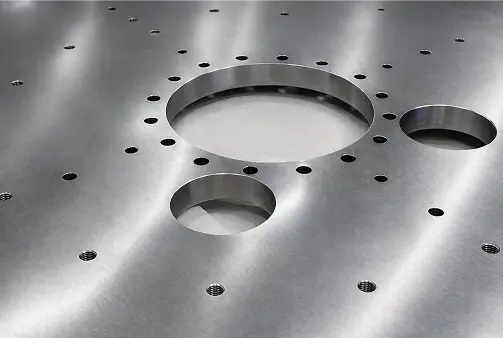
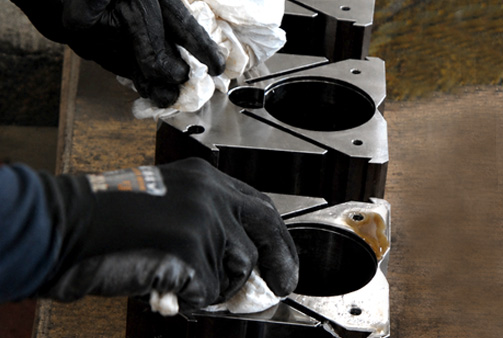
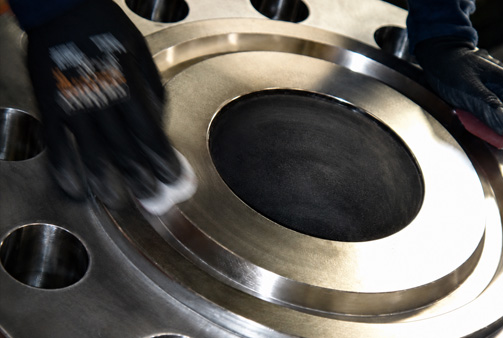
The pre-plating stage allows us to obtain a surface ready for deposition, guaranteeing the maximum chemical-technical quality of the process and its final result.
Pre-plating
How we prepare every surface for electroless nickel plating
Before electroless nickel plating, we carry out careful surface preparation, important to guarantee the adhesion, uniformity and durability of the coating.
- Cleaning and activation: deep chemical degreasing to eliminate oils/contaminants and surface activation.
- Oxide removal (if necessary): in the presence of scale, heavy oxidation or critical materials, micro-blasting or dedicated treatments may be provided, agreed with the customer.
- Masking: protection of areas not to be coated with specific plugs, high-temperature adhesives or dedicated protective paints.
- Dedicated cycles per material: differentiated pickling and activation for low- and high-alloy steels, copper and its alloys, aluminium and its alloys.
- Catalytic layer: for non-catalytic materials we apply a pre-treatment to activate the surface to be coated.
FAQ
Frequently asked questions about electroless nickel plating
The choice depends on the performance required of the component. Low phosphorus electroless nickel (1-4% P) is recommended when hardness and wear resistance are the priority; medium phosphorus (5-9% P) offers a good balance between mechanical performance and corrosion protection; high phosphorus (≥10.5% P) represents the solution offering the highest overall level of performance, thanks to its excellent corrosion resistance and proven reliability even in particularly aggressive environments.
For this reason, when there are no specific requirements calling for a different formulation, high-phosphorus ENP represents Deltar’s premium choice and preferred solution to ensure the highest level of protection, performance and long-term reliability.
Deltar offers the ENP 23, ENP 79 and ENP 1012 processes to identify the treatment best suited to the specific operating conditions of the component.
The thickness of an electroless nickel coating is defined according to the base material, the operating conditions and the required performance, such as corrosion and wear resistance. Geometry, surface finish and service environment can also affect the choice. For this reason there is no ideal thickness for every application: it must be assessed in relation to the characteristics of the component and its intended use.
As a reference, ASTM B733 sets a minimum thickness for four service conditions, from the least demanding (SC1) to the most severe (SC4).
Rough or uneven surfaces require a greater thickness to achieve maximum corrosion resistance. The actual thickness is verified on test specimens processed together with the parts.
One of the main advantages of electroless nickel plating is its ability to produce a uniform deposit even on components with complex geometries. Unlike electrolytic processes, deposition takes place through a chemical reaction rather than an electric current. This makes it possible to evenly coat hard-to-reach surfaces, such as holes, undercuts and internal cavities, helping to maintain the dimensional accuracy of the component. Uniformity in internal areas is ensured by the constant renewal of the solution, achieved through filtration and recirculation of the bath.
When performance beyond that of the standard deposit is required, three solutions are available:
- post-plating heat treatment (ASTM B733, class 2): raises the ENP 1012 high phosphorus deposit from 500-600 HV to approximately 1000 HV. However, it reduces the corrosion resistance of the deposit and must be assessed according to the base material, which may undergo mechanical or dimensional changes;
- nickel-silicon carbide codeposit (NiSiC), for very high hardness and abrasion resistance;
- nickel-PTFE codeposit, to reduce friction thanks to the self-lubricating and non-stick properties of PTFE.
For particularly aggressive environments, D-Shield is also available: an organic topcoat applied over the electroless nickel deposit to increase its corrosion resistance.
In electrolytic nickel plating, nickel is deposited by an electric current, which tends to build it up on edges and corners and to reduce it in holes and cavities. Electroless nickel plating takes place through a chemical reaction, without current: the deposit has a uniform thickness over the entire surface regardless of geometry, avoiding subsequent machining. At equal thickness, electroless nickel is also less porous and offers superior corrosion resistance in salt spray tests.
Yes. Each load of parts is accompanied by test specimens on which standard checks are carried out: visual inspection, thickness measurement and adhesion tests in accordance with ASTM B733 and ASTM B571. On request, additional tests are performed, such as Vickers hardness, porosity, phosphorus content and salt spray resistance (ASTM B117). At the end of processing, Deltar issues an inspection certificate in accordance with EN 10204 3.1.
For an initial assessment, the technical drawing, the base material and the operating conditions of the component (corrosion, wear, friction, temperature) are sufficient. To prepare the quotation, the following are also useful:
- dimensions, weight and quantity of parts;
- surfaces to be coated and areas to be masked;
- deposit type, thickness and required dimensional tolerances;
- surface condition: machined, as-cast, with oxides or mill scale;
- for high-strength steels, tensile strength or hardness, needed to define the hydrogen embrittlement relief treatment;
- any customer specifications or reference standards, such as ASTM B733, ISO 4527 or MIL-C-26074;
- required post-plating heat treatments, inspections and certifications.
Where no customer specification is provided, Deltar applies its own internal procedure, drawn up in accordance with the main international industry standards. Quotations are sent within 24 hours.